If you’ve ever queued for a Rocket League competitive match and wondered why you’re paired with players of seemingly random skill levels, or why you gain barely any rank points after a win, you’ve probably heard other players mention MMR. You might be asking what is MMR in Rocket League, and how it affects every part of your competitive play experience. I’ve been grinding Rocket League competitive lobbies for 6 years, peaking in Grand Champion 2 for 3 consecutive seasons, so I’ve seen first-hand how misunderstood MMR is for new and intermediate players. This guide breaks down exactly how MMR works, how it interacts with your visible rank, and what you can do to improve it without wasting dozens of hours on unproductive grind.
What is MMR in Rocket League, exactly?
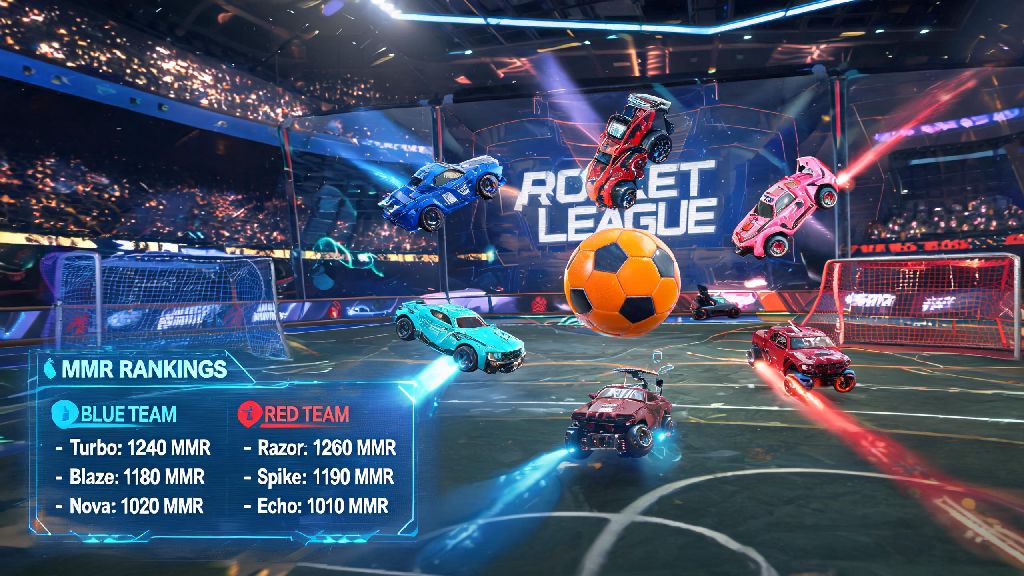
MMR, short for Matchmaking Rating, is a hidden, behind-the-scenes score that Psyonix uses to measure your actual in-game skill level and pair you with fair matches. It’s updated after every single competitive match you play, and it’s the only number that matters when it comes to who you play against and how your rank changes over time. MMR is not tied directly to your visible competitive rank points (RP) – that's one of the most common misconceptions new players have about the system.
A lot of players think if they have 800 RP in Platinum, their MMR is the same, but that's rarely the case, especially if you've been on a recent win or loss streak. MMR adjusts immediately after a match ends, before you even see your RP gain or loss pop up on screen. For example, if you beat a team with much higher average MMR than yours, your MMR will jump more than if you beat a team that's lower ranked than you.
You might have also heard players talk about “MMR hell”, a mythical place where you’re stuck with bad teammates and can’t climb. In almost all cases, MMR hell doesn’t exist – if your MMR stays the same for multiple seasons, it means your skill level is staying the same too. The system is designed to eventually place you where you belong, even if you have a few bad matches with random teammates. Over 100+ matches, the impact of bad teammates averages out, and your MMR will settle at a number that matches your actual skill.
How Rocket League calculates and adjusts your MMR
Rocket League’s MMR system is based on a modified version of the Elo rating system, originally designed for chess, adapted for team-based play. In most cases, it operates as a zero-sum system: the total MMR gained by the winning team equals the total MMR lost by the losing team, minus small adjustments for party size and skill gaps between players.
There are several core factors that determine how much your MMR changes after every match, including:
A lot of new players get frustrated when they win 3 matches in a row and only get 5 RP per win, then lose one match and lose 15 RP. That's not a bug, it's your MMR catching up to your rank. If your MMR is lower than your visible rank, the system thinks you're overranked, so it penalizes losses more and gives smaller gains until your rank aligns with your actual skill. I've been there myself back when I was stuck in Diamond: I got a lucky 7 win streak to hit Diamond 3, but my MMR was still low Diamond 1, so every loss cost me twice as much as each win gave me, and I dropped back to Diamond 2 within a day.
You might also notice that MMR adjustments are smaller the higher you climb. In Bronze and Silver lobbies, you can gain 20+ MMR per win if you beat higher ranked teams, but in Grand Champion lobbies, it’s rare to gain more than 10 MMR per win, because the skill gap between players is so small that the system is more confident in your skill rating.
The difference between MMR and your visible competitive rank
A lot of players use MMR and rank interchangeably, but they're two separate systems that work together to create the competitive experience you see in-game. Your visible rank (from Bronze up to Supersonic Legend) is just a public label for a specific MMR range, while your RP is a buffer that prevents you from ranking up or down after every single match.
Each rank tier has a fixed MMR threshold you need to hit to unlock it, but the RP you see on your profile is just a safety net between you and rank changes. For example, if your 2v2 MMR is 1120, that falls in the Platinum 3 range, so your visible rank will be Platinum 3 as long as you have enough RP to stay there. If your MMR drops to 1080, which is the threshold for Platinum 2, you’ll drop to Platinum 2 as soon as you run out of RP buffer. That’s why you might see players who are “ranked decayed” – they haven’t played in a while, so their visible rank dropped, but their MMR is still high, so they gain huge amounts of RP when they start playing again.
At the start of every new competitive season, your visible rank gets a soft reset, but your MMR stays almost the same. That's why you might place in Gold after a reset even if you finished Platinum last season: your MMR is still Platinum, so you'll gain way more RP per win until your visible rank catches up. You can check your approximate MMR using third-party tools, but Psyonix doesn't release official MMR numbers, so those tools are estimates based on your match history and rank gains/losses. Also, note that extra game modes like Rumble, Dropshot, and Hoops have their own separate MMR scores, so your 3v3 standard MMR doesn't affect your rank in those modes at all.
Proven tips to raise your Rocket League MMR consistently
Now that you understand how MMR works, you can adjust your grind routine to raise your MMR faster, without wasting hours on unproductive play. The biggest mistake most players make is fixating on their RP gains and losses instead of focusing on improving their actual skill. MMR only goes up long-term if your skill goes up, so short-term win and loss streaks don’t matter in the grand scheme of things.
Stick to one or two modes maximum for your competitive grind to see the fastest MMR gains. Jumping between 1v1, 2v2, and 3v3 every other match means you're not building consistent muscle memory for the playstyle of that mode, and your MMR will stagnate. I personally only grind 2v2 and 3v3 during a season, and I’ve noticed my win rate is 12% higher when I don’t bounce between modes randomly.
Review your own replays, especially losses. You don't have to watch the whole match: just skip to the parts where you conceded goals, and see what you could have done differently to prevent that play. Even 10 minutes of replay review a day will help you fix bad habits you don't notice while you're playing. Another common mistake is blaming teammates for every loss instead of looking at your own play. Even if your teammate missed an easy save, you can almost always find a way you could have prevented the goal earlier – maybe you were out of position on the offensive side, or you didn't clear the ball properly before pushing up. Taking ownership of every play, even the ones that aren't directly your fault, will help you improve much faster than blaming others.
Don't queue when you're tired or tilted. Your reaction time drops by almost 20% when you're fatigued, which is enough to drop you a full rank tier in terms of performance. If you lose two matches in a row, take a 10 minute break, walk around, drink some water, and come back when you're focused again. I used to grind for 4 hours straight when I was trying to hit Grand Champion, and I noticed my win rate dropped from 58% to 39% after the first 2 hours. Once I started limiting my grind sessions to 90 minutes max with breaks in between, I hit Grand Champion in 3 weeks instead of the 2 months I'd been stuck before.
At the end of the day, MMR is just a system designed to make sure you get fair, fun matches against players of similar skill level. Understanding what is MMR in Rocket League takes away a lot of the frustration that comes with competitive play, because you'll know exactly why you're getting the rank gains and losses you see after each match. You don't have to chase a specific MMR number to enjoy the game, but if you do want to climb the ranks, focusing on small, consistent improvements to your mechanics and game sense will move your MMR up faster than any short-term win streak ever could. Next time you log on for a competitive grind, don't fixate on the RP numbers at the end of the match – focus on playing better than you did in your last game, and the rest will follow.