If you’ve spent hours grinding casual Rocket League matches and finally feel ready to test your skills against players of a similar level, you’ve probably asked yourself how does ranked work in Rocket League at least once. I still remember my first ever ranked match back in 2017: I was so nervous I scored two own goals in the first two minutes, and ended the season hard stuck in Bronze 2. Ranked play is where the real competitive fun happens, but it can feel overwhelming if you don’t understand the rules, ranking system, or what actually impacts whether you rank up or down after a match. I’ve been playing Rocket League ranked for almost 7 years, and I’ve climbed from Bronze all the way to Grand Champion twice, so I’ve seen first-hand how confusing the system can be for new players. This guide breaks down every part of the ranked system, plus common mistakes that stop players from climbing even when they have the mechanical skill to move up.
How Does Ranked Work in Rocket League: Core Rules & MMR Basics
At its core, Rocket League’s ranked system runs on a hidden score called MMR, or Matchmaking Rating, that the game uses to match you against opponents of similar skill. MMR is the only metric that actually determines your rank, not the visible tier badge you see on your profile. Every time you win a match, you gain MMR, and every time you lose, you lose MMR. The amount you gain or lose depends entirely on the average MMR of the opposing team. That means if you beat a team with a much higher average MMR than yours, you’ll gain far more MMR than you would beating a team at your same skill level. Conversely, if you lose to a team with lower average MMR, you’ll lose a lot more MMR than you would losing to a higher-ranked team. You will only rank up or down when your MMR crosses the threshold for the next tier, even if you win 10 matches in a row if you haven’t hit that threshold yet, you won’t move up. The system also adjusts matchmaking during win streaks to test if you’re ready for a higher rank, so don’t be surprised if you start facing much harder opponents after 3 or 4 consecutive wins.
Every Rocket League Rank Tier Explained, From Bronze to Supersonic Legend
Rocket League has 8 total rank tiers, each split into 3 divisions, except for the highest tier which has no divisions. As you climb, you’ll notice the skill gap between each tier gets wider and wider, especially once you hit Champion rank. 80% of active Rocket League ranked players fall between Gold 1 and Diamond 3, so don’t feel discouraged if you’re stuck in those tiers for a while. Here’s what you can expect at each major rank bracket:
- Bronze to Silver: Most players are still learning basic mechanics like aerial hits and proper positioning; expect lots of own goals and uncoordinated team play, with little to no focus on rotation
- Gold to Platinum: Players have consistent basic mechanics, but struggle with rotation and decision-making under pressure; this is the most crowded rank bracket, and where most players get stuck for months or even years
- Diamond to Champion: Players have solid mechanical skills, understand rotation, and can pull off advanced moves like ceiling shots and flip resets semi-consistently; team coordination becomes far more important here
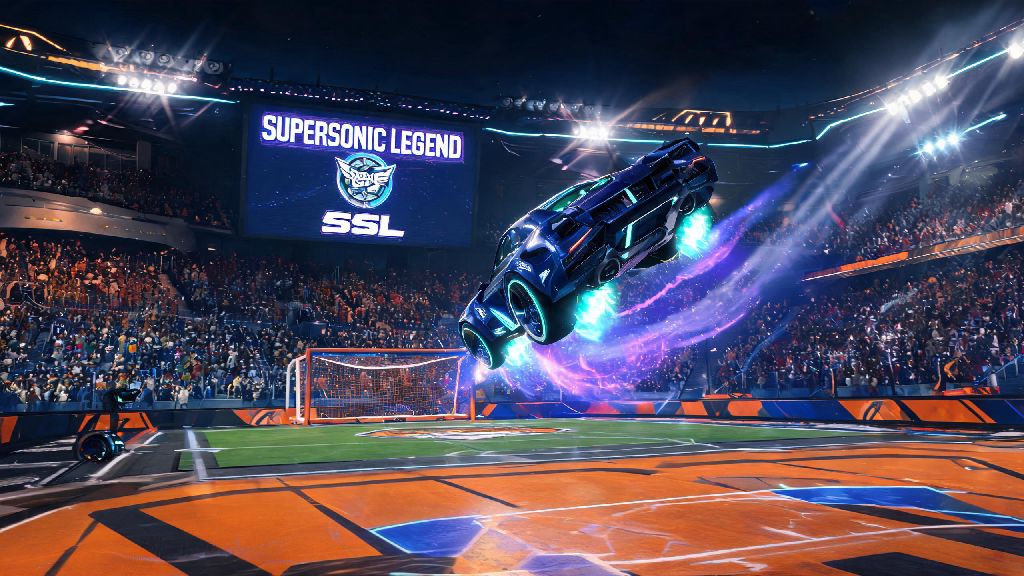
- Grand Champion to Supersonic Legend: The top 1% of all ranked players, with near-perfect mechanics, game sense, and team coordination; Supersonic Legend is only awarded to the top 150 players per platform per playlist each season
Key Factors That Impact Your Rank Progression
There are a lot of common misconceptions about what affects your rank, and most of them are spread by players who are frustrated about not climbing. Contrary to popular belief, your individual stats like goals, saves, or assists do not impact how much MMR you gain or lose per match. The system only cares if your team won or lost, not what you did individually. I’ve seen so many players complain about “carrying” their team and still ranking down, but that’s just how the system works: it’s a team game, so wins and losses are shared equally across the whole team. Another big factor is your party size. If you queue with a friend who’s 2 or more tiers higher than you, the system will match you against opponents closer to their MMR, so you’ll gain less MMR for wins and lose more MMR for losses. Queuing solo will always give you the most consistent MMR adjustments, as the system doesn’t have to account for skill gaps between party members. Seasonal rank resets also impact your progression. At the end of every season, your MMR gets a soft reset that pushes it slightly towards the middle of the rank distribution. You’ll have to play 10 placement matches to get your new rank, but those placements aren’t random: they’re based on your previous season’s MMR plus your win rate in the placement matches. You’ll almost never rank up more than one full tier from your previous season’s end rank, even if you win all 10 placements.
Proven Tips to Climb Rocket League Ranks Faster
I’ve helped dozens of friends climb from Platinum to Champion over the years, and the same tips work for almost every player, no matter their skill level. The single biggest change you can make to climb faster is to stop blaming your teammates and review your own replays after every loss. I used to blame every loss on bad teammates when I was stuck in Platinum, but once I started reviewing my replays, I realized I was making just as many mistakes as they were, like overcommitting for shots I had no chance of hitting or leaving my net wide open. You also don’t need flashy mechanics to climb to high ranks. I hit Champion for the first time without being able to do a flip reset or a ceiling shot, just by mastering basic positioning and rotation. Good game sense and rotation will carry you to higher ranks far faster than flashy mechanics you can only pull off 10% of the time. Spend 10 minutes a day practicing basic aerials and shadow defense, and you’ll see far more progress than spending hours trying to learn flip resets. If you lose 2 or 3 matches in a row, step away from the game for at least 10 minutes. Tilt is the number one reason players lose far more MMR than they should, because you start making reckless decisions and playing worse the more frustrated you get. I used to play for 4 hours straight when I was on a losing streak, and I’d drop an entire tier in one sitting. Now I log off as soon as I feel myself getting frustrated, and I’ve had way more consistent progress since. So pick one playlist to focus on first, instead of jumping between 1v1, 2v2 and 3v3 every other match. Each playlist requires very different skills, and focusing on one will help you improve much faster than splitting your time across all three.
Ranked play is one of the most rewarding parts of Rocket League, and once you understand how does ranked work in Rocket League, you can stop guessing why you’re not climbing and start taking actionable steps to hit your goal rank. Don’t rush the process, even the best players spent thousands of hours grinding to get to the top tiers. If you stick to the tips we covered and focus on improving your own skills instead of worrying about your rank, you’ll be moving up tiers before you know it.