If you’ve spent any time scrolling Rocket League community forums or watching pro gameplay clips, you’ve probably seen the same debate pop up over and over: what’s the best car to use? For new players still learning the basics of aerials and dribbling, it’s easy to get confused when everyone seems to swear by a different model. The core question tying all these debates together is do cars matter in Rocket League, and the answer is a lot more nuanced than a simple yes or no. This guide breaks down both the objective performance factors and subjective preferences that go into picking the right car for your playstyle, so you don’t waste time switching between meta picks that don’t work for you.
How Car Hitboxes Are the Core of Whether Cars Matter in Rocket League
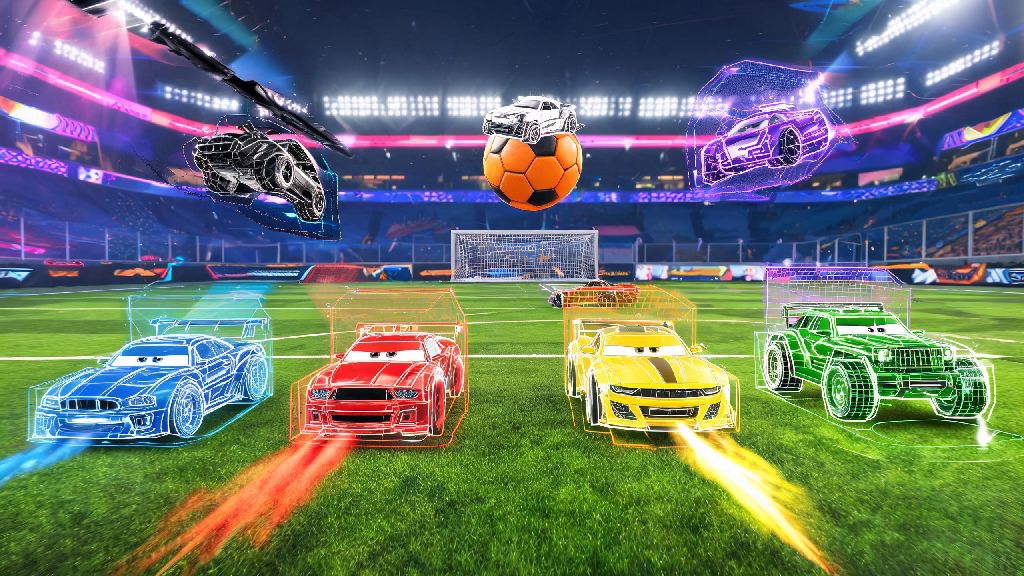
The biggest mistake new players make is assuming that every car in Rocket League has unique performance stats tied to its visual design. In reality, every car in the game is assigned to one of six standardized hitbox classes, and every car in the same class has identical weight, turn radius, hitbox dimensions, and acceleration. The only real objective difference between cars is which hitbox class they belong to, and how well their visible model lines up with that hidden hitbox.
For example, the wildly popular Fennec and the iconic Octane both use the Octane hitbox, which is the most widely used class across casual and competitive play. That means they perform exactly the same in every measurable way, even though they look completely different. The car model you use only matters if its visual shape matches its assigned hitbox, because a mismatch will throw off your ability to judge when you’re going to make contact with the ball or another car. If you’re using a slim, low-profile car that has a tall, wide hitbox, you’ll constantly find yourself missing hits you swore you should have made, or running into walls you thought you were clear of.
Each hitbox class has its own strengths and weaknesses. Octane hitboxes are balanced for all playstyles, with good height for aerials and a tight turn radius for ground play. Dominus hitboxes are longer and flatter, making them popular for players who focus on flip resets and ground dribbles. Plank hitboxes are the widest and shortest, making them a great pick for 1v1 players who want to cover more space when defending shots. You don’t need to memorize every hitbox stat when you’re starting out, but it’s helpful to know which class your go-to car falls into so you can test other cars in the same class if you want a change without adjusting to new performance stats.
Subjective Factors That Make Certain Cars Feel Better to Play With
Even if two cars have the exact same hitbox, they can feel completely different to play with, and that difference is enough to impact your performance. A big part of that is visual clarity: if a car’s edges line up perfectly with its hitbox, you’ll be able to judge hits far more accurately than you would with a car that has lots of extra details or an unusual shape that extends outside the hitbox bounds. That’s why so many players switched from Octane to Fennec when it was released – the blocky, square shape of the Fennec makes it far easier to tell where your hitbox ends, especially when you’re mid-air going for an aerial or a flip reset.
Other small details can change how a car feels too, even if they don’t impact actual performance. The engine sound a car makes, the way it bounces when it hits the ground, and even the color scheme you use for it can make it feel more or less responsive to your inputs. I spent 300 hours playing almost exclusively with the Dingo, another Octane hitbox car, before I tried Fennec, and I was shocked by how much easier it felt to line up air dribbles, even though the stats were exactly the same. Your personal comfort with a car’s visual design will impact your performance far more than any tiny stat difference between hitboxes, so don’t feel pressured to use a meta car if it feels awkward to you.
Casual players have far less reason to stress about these factors, of course. If you only play a few matches a week with friends, you can use whatever car you think looks cool, and you’ll still have a great time. The only time these subjective differences start to matter is when you’re playing ranked regularly and trying to climb up the divisions, or if you’re training for competitive tournaments. Even then, it’s all about what works for you, not what everyone else is using.
When Should You Switch Your Rocket League Car for Better Performance?
Switching cars isn’t something you should do on a whim, because it takes time to build muscle memory for a new model’s visual shape and feel. If you’re playing well with your current car and having fun, there’s no reason to change it just because you see a pro using something different. That said, there are a few clear signs that switching cars could help you break through a skill plateau and improve your gameplay.
If any of those sound like you, it’s worth testing a few different cars in casual play or free play to see if something feels more natural. Never switch cars right before a competitive tournament or ranked grind session, because your muscle memory will be off and you’ll likely play worse than you would with your old car. Give yourself at least 20 hours of casual play and training with the new car before you take it into ranked matches, so you have time to adjust to its shape and feel.
You also don’t have to stick to just one car forever. Lots of players switch between hitbox classes depending on the game mode they’re playing. For example, you might use a Plank hitbox car for 1v1 play where you need to cover more defensive space, and an Octane hitbox car for 3v3 play where you need more agility for aerials. There’s no rule that says you have to pick one car and use it for every game mode forever.
Common Myths About Rocket League Cars Debunked
There’s a lot of misinformation floating around the Rocket League community about cars, and it’s easy for new players to fall for these myths and waste money or time on cars that don’t actually help them. One of the most common myths is that pros only use Octane, so it’s the only viable car for competitive play. While Octane is the most popular hitbox class among pros, plenty of top players use Dominus, Hybrid, and even Plank hitbox cars depending on their playstyle. You don’t have to use Octane to climb to Grand Champion or compete in tournaments.
Another widespread myth is that rare or paid cars have better stats than free default cars. Psyonix has confirmed multiple times that all cars in the same hitbox class have identical performance stats, no matter how rare or expensive they are. Paid cosmetic car skins never give you any competitive advantage over free default cars, so don’t waste real money on a car thinking it will make you play better. The only benefit to paid cars is that you might like their design more, which can make them feel better to play with, but that’s a purely subjective benefit.
The last big myth is that smaller cars are better for dribbling, and bigger cars are better for defending. That’s not true at all, because performance is tied to hitbox class, not visual size. A tiny-looking car with an Octane hitbox will have exactly the same dribbling performance as a huge-looking car with the same hitbox. There is no universally "best" car in Rocket League – the best option is always the one that feels most natural to you. Don’t let anyone tell you that you’re playing the game wrong because you use a car that’s not considered meta.
If you’re still not sure which car is right for you, spend an hour in free play testing out a few different hitbox classes. Drive around, hit the ball, try a few aerials, and see which one feels the most intuitive. You’ll probably find that one class clicks with you immediately, and that’s the one you should stick with, no matter what anyone else says.
At the end of the day, the question of do cars matter in Rocket League has a two-part answer. Objectively, yes, hitbox classes have measurable performance differences that impact how you play the game, and a car that lines up well with its hitbox will make it easier to judge hits accurately. Subjectively, the specific car model you use only matters as much as your comfort level with it, and you don’t have to use the most popular meta pick to play well. Whether you’re a casual player who just wants to use a car that looks cool, or a competitive player grinding for Grand Champion, the best car for you is the one that helps you have fun and play your best. Don’t overcomplicate it – test a few options, stick with what works, and focus on improving your mechanics instead of chasing the perfect car.