If you’ve spent any time playing competitive Rocket League, you’ve probably seen a random low shot off the back wall curve into the top corner of the net and assumed it was a lucky fluke. Most of the time, that play isn’t luck at all—it’s a planned, repeatable mechanic. That play is what a pool shot in Rocket League is, and it’s one of the most underrated offensive tools you can add to your skill set. It doesn’t require fancy aerial mechanics or thousands of hours of practice to pull off, either. All you need is a solid understanding of how it works and a little bit of targeted practice.
What Exactly Is a Pool Shot in Rocket League?
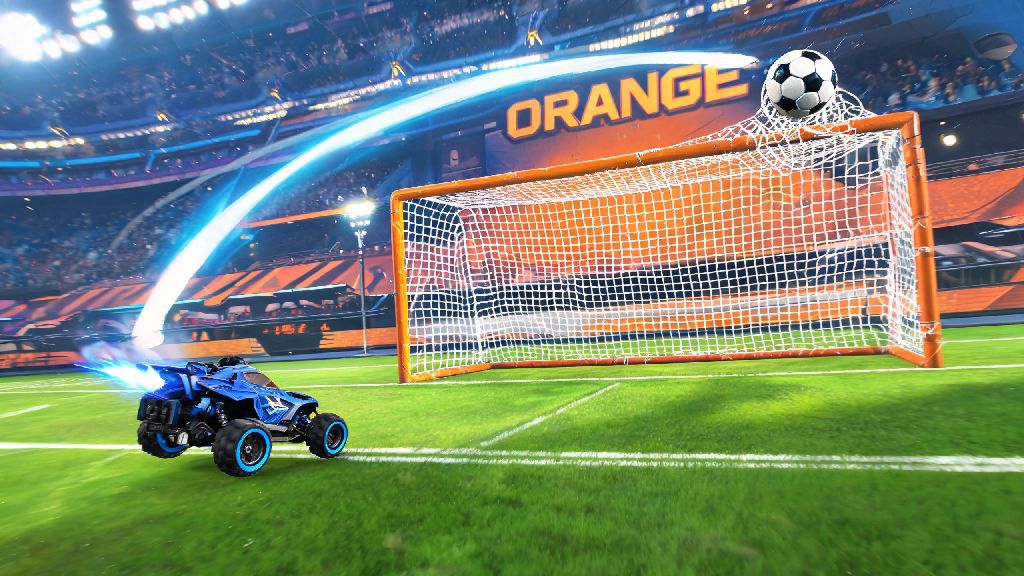
The pool shot gets its name from real-life billiards, where players hit the cue ball off a table rail to sink a shot that would be impossible with a direct hit. In Rocket League, it works the exact same way. You hit a ball that’s rolling or bouncing close to a wall (usually the opponent’s back wall in their penalty area) at an angle, putting side spin on the ball so it ricochets off the wall and curves toward the net. The biggest advantage of a pool shot is that it catches goalies completely off guard, since most players position themselves to block direct shots rather than shots that curve off the wall into the far corner.
It’s important not to confuse pool shots with regular wall shots. A standard wall shot involves you hitting the wall first, then the ball as it bounces off. With a pool shot, you hit the ball first, and the side spin you apply is what makes the ball curve after it hits the wall. That spin is what makes the path so unpredictable for defenders, even if they see you lining up the play.
Core Mechanics That Make Pool Shots Work
You don’t need to be a Grand Champion to pull off a consistent pool shot, but you do need to get four core details right every single time. Miss one, and your shot will either fly wide, bounce straight to the opposing goalie, or not curve at all. These are the non-negotiable requirements for a successful pool shot:
Your approach angle matters a lot too. You want to come at the ball from a 30 to 45 degree angle relative to the wall, not head-on. If you come at the ball straight, you won’t be able to put enough side spin on it to make it curve after it bounces. I spent three weeks practicing this in free play before I could pull it off reliably in casual matches, so don’t get discouraged if your first 50 attempts miss completely. The muscle memory clicks faster than you think.
When to Use (and Avoid) Pool Shots in Matches
Pool shots are incredibly effective in the right scenarios, but they’re not always the best choice. The best times to go for a pool shot are when you have a clear path to the ball with no opponent pressuring you from behind, when the opposing goalie is planted in the center of the net blocking all direct shot angles, or when your teammate just cleared the ball to the opponent’s back wall and you’re rotating up for an offensive play. In these cases, the pool shot gives you a high chance of scoring with very little risk.
Never go for a pool shot if an opponent is within 2 car lengths of you, because they can easily bump you off the ball mid-hit and launch a counterattack on your net. You also should avoid it if the ball is moving faster than 30kph, because you won’t be able to get enough controlled spin on it to make the curve work. I learned this the hard way a few seasons back, when I went for a risky pool shot as the last defender on my team in a tournament semi-final. I missed, the other team hit a fast break on our empty net, and we lost the match. Save the risky attempts for when you have teammates backing you up.
Easy Drills to Practice Pool Shots Consistently
The best part about pool shots is that you don’t need to grind 10 hours a day to get good at them. 10 to 15 minutes of targeted practice a day is enough to get consistent with them in a week. Start with a simple free play drill: spawn the ball near the opponent’s back wall, roll it parallel to the wall, then approach from the side and practice hitting it with side spin so it bounces off the wall and into the far top corner. Focus on accuracy first, then power, when you’re practicing, you don’t need to hit the ball hard to make it curve.
Once you get the hang of the free play drill, move on to custom training packs focused on back wall finishes. Most popular community-made packs for lower and mid-ranked players have multiple pool shot scenarios that mimic real match conditions, so you can practice reacting to different ball speeds and positions. Don't worry about missing in casual matches when you first start testing this skill in real play. Casual matches are made for testing new mechanics without risking your ranked rank. You can also turn on ball spin indicators in your game settings to see exactly how much side spin you’re putting on the ball with each hit, which will help you adjust your angle much faster.
At the end of the day, a pool shot in Rocket League isn’t just a fancy trick shot to show off to your friends. It’s a practical, high-success-rate offensive tool that can help you score goals that would otherwise be completely impossible. You don’t need to be a pro player to pull it off, and once you get the hang of the basic mechanics, you’ll be shocked how many unsuspecting goalies you can catch napping with it. Start slow, practice the fundamentals first, and only use it in matches when the conditions are right, and you’ll start seeing more wins in no time.