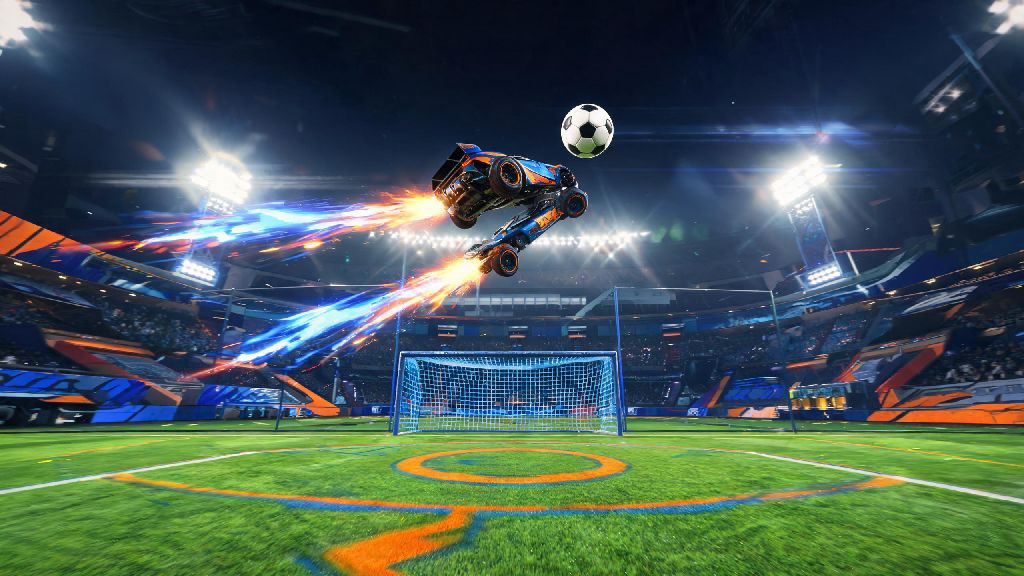
You know that frustrating feeling when an opponent flies past you to slot a goal before you even get halfway off the ground? Or when a perfect cross goes sailing over your head because you can’t reach it mid-air? I’ve been there too. When I first started playing, I thought aerial play was only for Grand Champion players with 1,000+ hours logged. That’s not true at all, and once I figured out how to fly in Rocket League with basic, repeatable skills, my rank jumped two full divisions in less than a month. This guide skips the fancy pro mechanics and focuses on core skills that work for every rank from Bronze to Champ.
How to Fly in Rocket League: Core Fundamentals You Need to Nail First
If you skip these basics, you’ll never get consistent flight no matter how much you practice in training packs. First, boost management is non-negotiable. You need at least 30 boost to pull off a basic aerial, and 50+ for longer flights across the pitch. Don’t waste all your boost on low-value ground dribbles if you know a high ball is coming your way soon.
Second, your jump timing matters more than you think. The first jump gives you base height, and the second jump (hold it down) tilts your car in the direction you’re facing, so don’t use that second jump until you’re pointed exactly where you want to fly. I used to double jump immediately every time I went for an aerial, and I’d end up spinning off course before I even got 10 feet off the ground.
Third, adjust your camera settings for aerial play. If your camera is too close to your car, you won’t be able to see the ball or your position relative to the net. Most pro players use a camera distance of 270-300, field of view between 105-110, and camera shake turned off completely. I played with camera shake on for my first 200 hours, and switching it off immediately made my aerial accuracy 3x better.
Common Mistakes That Make Flying Way Harder Than It Should Be
If you’re struggling with how to fly in Rocket League, the first thing to check is whether you’re making any of these super common errors. The biggest one I see with new players is overcorrecting mid-air. It’s tempting to yank your stick left and right as soon as you feel like you’re off course, but that will just send your car spinning out of control. Instead, make small, gentle adjustments, and use air roll only when you need to reposition your car to hit the ball.
Another big mistake is using all your boost at once. You don’t need to hold down boost the entire time you’re in the air. Tap it in short bursts to adjust your height, and coast when you’re moving in the right direction. That way you’ll have enough boost left to correct your course at the end of your flight, or get back to the net quickly if you miss the ball.
I also see a lot of players staring only at the ball the entire time they’re flying. You need to glance at the net, your teammates, and your opponents every few seconds so you don’t end up flying into empty space or hitting the ball straight to the other team. Even if you make a perfect aerial hit, it’s useless if it gives the opponent an easy counterattack.
Practice Drills to Build Consistent Flight Skills Fast
You don’t need to spend 2 hours a day in training to get good at flying. Even 10 minutes of focused practice before you play casual matches will make a huge difference in a week or two. These are the three drills I recommend every new player start with, no fancy custom packs required:
Don’t get frustrated if you miss 9 out of 10 shots when you first start these drills. I missed every single one for my first three practice sessions, and then it suddenly clicked. The key is to focus on form over speed when you’re starting out. If you rush, you’ll just build bad habits that are hard to break later.
How to Use Aerial Flight in Real Matches (Without Throwing)
Once you can pull off consistent flights in training, the next step is using them in real matches without putting your team at a disadvantage. First, only go for aerials that you know you can reach. If the ball is across the pitch and you only have 20 boost, stay on the ground and let a teammate who has more boost go for it. There’s no shame in passing up an aerial if it means you don’t leave your net wide open for a counterattack.
Second, communicate with your teammates before you go for an aerial. A quick “I got it” in chat will stop your teammate from jumping up with you and wasting both of your opportunities. I can’t tell you how many times I’ve seen two teammates fly up for the same ball, miss, and leave the net completely undefended.
Third, don’t go for fancy aerial shots until you’re comfortable with basic aerial passes and saves. A simple, well-placed aerial pass to a teammate in front of the net is way more valuable than a flashy air dribble that you miss and gives the other team a breakaway. If you’re playing in lower ranks, you don’t even need to do aerials every match. Use them only when they give you a clear advantage, and stick to ground play for the rest of the time.
Learning how to fly in Rocket League doesn’t have to be an impossible task reserved for top-ranked players. If you nail the core fundamentals, avoid the most common mistakes, and put in 10 minutes of focused practice a day, you’ll be pulling off smooth aerials in matches before you know it. Don’t get discouraged if you mess up at first, every player goes through that phase. Start small, focus on consistency over speed, and you’ll be shocked at how quickly your rank climbs once you add aerial play to your skill set.