If you’ve ever queued for a Rocket League casual match at 2 a.m. on a Tuesday and gotten a lobby in under 10 seconds, you’ve probably wondered just how massive the game’s global audience really is. If you’re asking how many downloads does Rocket League have, you’re not alone--casual players, competitive fans, and even people just considering trying the game regularly look for clear, up-to-date numbers on its reach. We pulled the latest verified public data from Psyonix and platform holders to answer that question, plus break down where those downloads come from, what’s driving the game’s years-long growth, and what that large player base means for your day-to-day game experience.
How Many Downloads Does Rocket League Have Across All Platforms?
As of the latest official data release, Rocket League has hit over 90 million lifetime downloads across all supported platforms. That count includes both the 14 million paid copies sold before the game switched to a free-to-play model in 2020, and all free downloads made after that shift. It’s worth noting that this number counts multiple downloads for the same user across different platforms, so the unique player count is slightly lower, but it’s still an accurate measure of the game’s overall cultural reach. It’s interesting to see how many downloads does Rocket League have total, and why it’s remained one of the top 10 most played online games on every platform it’s available on for years running. I’ve personally downloaded the game on PC, Switch, and PS5 over the past 7 years, so I’m definitely one of those repeat download entries, but that just speaks to how easy it is to jump into a match no matter what device you have handy.
Breakdown of Rocket League Downloads by Platform
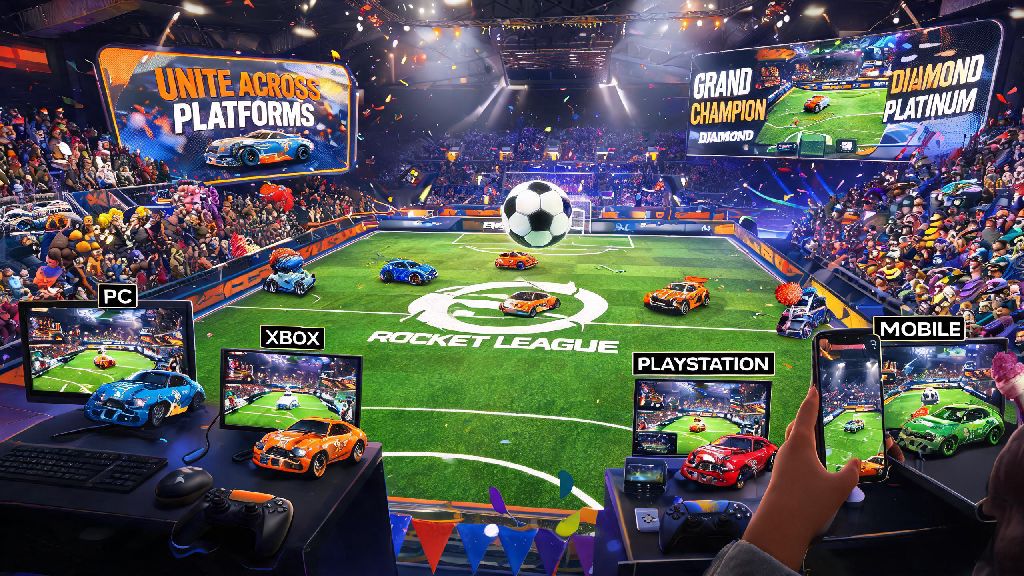
The 90 million total downloads are spread pretty evenly across console and PC, with a few clear standouts based on platform promotions and accessibility features. Here’s the latest split of downloads by platform:
- PC (Steam + Epic Games Store): Roughly 42% of total downloads, making it the most popular platform for the game. Epic Games’ 2020 free giveaway to celebrate the free-to-play launch drove over 15 million downloads in the first week alone.
- PlayStation 4 & 5: 31% of total downloads, boosted by frequent PlayStation Plus promotions and early cross-play support that let PS users match with players on every other system long before many other games added the feature.
- Xbox One & Series X/S: 18% of total downloads, with consistent year-over-year growth thanks to the game being included in Xbox Game Pass for both console and cloud play at no extra cost for subscribers.
- Nintendo Switch: 9% of total downloads, popular among casual players who prioritize on-the-go play even if the system’s graphical performance is slightly lower than other consoles.
You won’t find mobile on that list right now, as the official global Rocket League mobile port hasn’t launched yet. Limited closed beta tests for mobile have already pulled in over 2 million pre-registrations, so total downloads will almost certainly cross the 100 million mark within a year of the mobile version’s full launch. It’s not hard to guess how many downloads does Rocket League have the potential to hit once mobile is available to billions of users worldwide.
What’s Driving Rocket League’s Steady Download Growth Years After Launch?
Most online games see their download numbers peak within the first year of launch, then drop off slowly as players move on to new releases. Rocket League is the rare exception, with download numbers still growing 8 years after its initial 2015 launch. The biggest driver of that sustained growth is full cross-play and cross-progression support across all platforms. You can start a competitive match on your PS5 at home, then pick up the same account with all your skins, ranks, and progress intact on your Switch when you’re visiting a friend, no extra work required. That removes almost every barrier to trying the game on a new device, even if you’ve already been playing for years.
Regular seasonal content updates are another big draw. Psyonix drops a new season every 3 to 4 months, with new maps, limited-time game modes, cosmetic packs, and massive crossover events with franchises like Fortnite, Marvel, and Fast & Furious. These events draw in lapsed players who come back to grab exclusive crossover skins, and often bring in brand new fans who only found the game through the crossover promotion. The global competitive scene also plays a huge role. The Rocket League Championship Series (RLCS) draws millions of viewers every split, and it’s common to see a spike in downloads right after a major tournament, as new fans want to try to pull off the same ceiling resets and flip resets they saw pros pull off on stream. I know I convinced three of my college roommates to download the game back in 2019 after we watched a grand finals match where a pro scored a last-second game-winning goal off a double tap, so I’ve seen that impact first hand.
What Rocket League’s Download Count Means For Your Game Experience
All those 90 million downloads don’t just make for an impressive trivia number--they directly impact how you experience the game every time you log on. The most obvious benefit is extremely short queue times for almost every game mode. Even for less popular modes like Dropshot or Hoops, you’ll rarely wait more than 30 seconds for a match in most regions, even during off-peak hours. That’s a huge upgrade from smaller online games that can leave you waiting 10 minutes or more for a match if you’re not playing during prime time. If you’ve ever wondered why you can find a ranked 3v3 match at any hour, the answer ties directly back to how many downloads does Rocket League have and how many of those players log in regularly.
You also get way more variety in your matches. With such a large active player base, you won’t get matched against the same small group of players every time you queue, even if you’re in the highest competitive ranks. That keeps gameplay fresh, and facing off against players with wildly different playstyles helps you improve much faster than you would playing the same group of people over and over. There are a few small downsides to the large player base, of course. You’ll run into the occasional smurf--a high-rank player using a new low-level account to stomp new players--more often than you would in a smaller, less popular game. But Psyonix has rolled out improved smurf detection and rank adjustment tools over the past year, so that issue has gotten far less common than it used to be. The large community also means it’s incredibly easy to find teammates at your exact skill level if you don’t want to queue with randoms. You can join dedicated Discord servers, Reddit communities, or in-game clubs and find a group to play with in minutes, no matter what rank you are or what mode you want to play.
At the end of the day, asking how many downloads does Rocket League have is more than just a fun question to settle a bet with your friends. It’s a way to measure just how much staying power this weird, wonderful mix of soccer and rocket-powered cars has had over the past near-decade. That 90 million+ download count isn’t just a vanity metric for Psyonix--it’s proof that the game’s simple to learn, hard to master gameplay loop still resonates with players all over the world, regardless of age, skill level, or preferred platform. Whether you just downloaded the game yesterday and are still learning how to hit the ball straight, or you’re a veteran who’s been playing since the early paid access days, that massive, active player base means you’ll have thousands of matches to play, new friends to meet, and new tricks to learn for years to come.