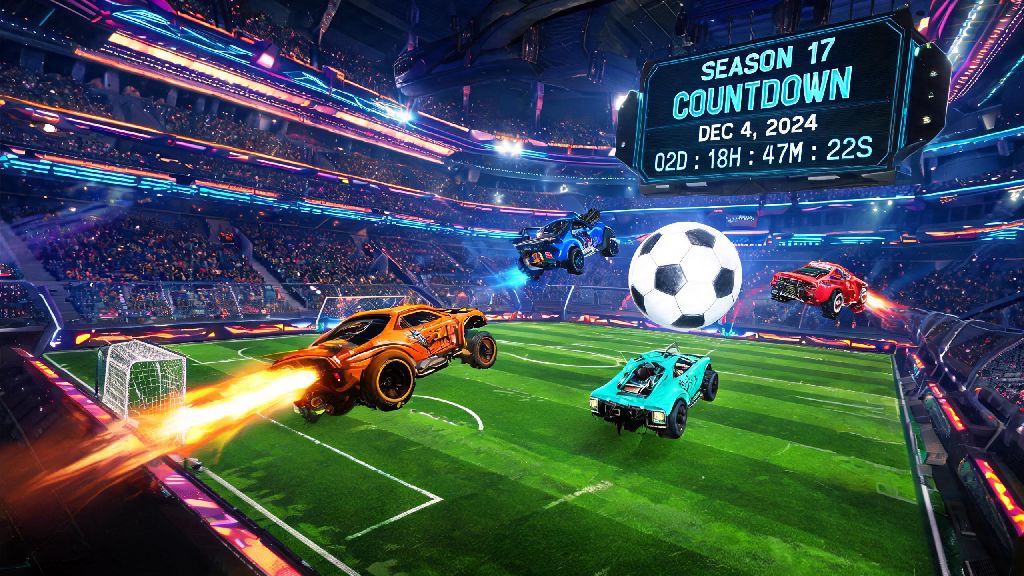
If you’ve logged into Rocket League anytime in 2026, you’ve probably noticed longer queue times for casual matches, more frequent tournament announcements, and even collabs with blockbuster movie franchises popping up in the item shop. It’s hard not to wonder how big is Rocket League now, seven years after its free-to-play shift and with consistent updates keeping the player base engaged. I’ve been playing the game on and off since its 2015 launch, and the scale of its current community blows the early days out of the water. This post breaks down every metric that matters, from player counts to revenue numbers, to give you a full picture of the game’s reach in 2026.
How Big is Rocket League in 2026: Core Player Count Metrics
All numbers shared here come directly from Psyonix’s official Q2 2026 community report, so you don’t have to rely on sketchy third-party estimates that often inflate or undercount player bases. As of mid-2026, the game has 128 million total registered accounts across all supported platforms, with 21.7 million monthly active players logging in at least once every 30 days. When you factor in mobile players, who were added to the count in late 2025, it’s obvious how big is Rocket League’s global reach, with players in over 180 countries logging in regularly.
Breakdown by platform shows 62% of active players are on console (PlayStation 5, Xbox Series X/S, and Nintendo Switch 2), 28% on PC (Steam and Epic Games Store), and 10% on the free mobile version launched in late 2025. Peak concurrent players hit 1.8 million during the 2026 RLCS World Championship finals last month, a 22% increase from the 2025 finals peak. If you’ve been curious about how big is Rocket League beyond just surface-level numbers, these official metrics paint a clear picture of its broad, cross-demographic appeal.
Rocket League Esports and Commercial Scale in 2026
It’s easy to underestimate how big is Rocket League’s commercial footprint until you look at the revenue and sponsorship numbers released earlier this year. The 2026 RLCS season has a total prize pool of $12.5 million, a 30% jump from the 2025 season, with regional qualifier prizes also increased to support up-and-coming players. The 2026 world finals held in Tokyo drew 12 million live concurrent viewers across Twitch, YouTube, and TikTok Live, making it the third most-watched esports event of the year so far, behind only League of Legends Worlds and CS2 Majors. Viewership numbers for regional qualifiers are also up 47% YoY, per the official 2026 RLCS viewership report, with smaller regional tournaments pulling in more viewers than most other mid-tier esports events.
Total 2025 revenue for the game hit $890 million, with projections showing it will cross the $1 billion mark for the first time in 2026. Even casual players who never watch competitive events contribute to how big is Rocket League’s overall scale, since their in-game purchases fund a lot of the content updates. The top revenue drivers for the game in 2026 are:
2026 has already seen high-profile collabs with Dune: Part Two, Mario Kart 9, and the NFL, with collab item sales up 22% YoY as of mid-year. The only common complaint from players about these collabs is that limited edition skins are often priced 30-40% higher than regular in-game items, which locks some lower-income players out of collecting rare skins.
Factors Driving Rocket League’s Sustained Growth in 2026
Many industry analysts were surprised by how big is Rocket League’s growth spurt in 2025, but the trend has continued through the first half of 2026, and there are a few clear reasons for that longevity. First, full cross-progression launched in 2024, so players can carry their entire inventory, rank, and progress across every platform, no matter where they first created their account. I switched from PC to PlayStation 5 last year, and being able to bring all my old limited edition Halloween 2018 skins over meant I didn’t have to start from scratch, which is the main reason I still play 3-4 times a week. Psyonix data shows cross-progression reduced player churn by 31% in its first year alone.
Second, the addition of casual, low-stakes game modes in 2025 opened the game up to players who don’t care about climbing the ranked ladder. Rocket Racing, which integrated directly with Fortnite’s creative mode, brought in 14 million new players in 2025, many of whom had never played the core Rocket League soccer mode before. The new 2v2 Hoops ranked mode launched in Q1 2026 has also been a hit with casual players who want a break from the standard soccer format.
Third, cross-platform matchmaking means most players never wait more than 2 minutes for a casual match, even in off-peak hours. The only exception is top 100 ranked players, who can wait up to 15 minutes for a match since there are so few players at that skill level, but that’s a small tradeoff for fast queues for the vast majority of the player base. The game’s lack of pay-to-win mechanics also means new players don’t feel pressured to spend money to compete, which keeps the barrier to entry extremely low.
Common Myths About Rocket League’s Size Debunked
A lot of the misinformation about how big is Rocket League comes from anecdotal posts on social media, where users assume their small friend group’s activity reflects the entire player base. One of the most common myths is that Rocket League is a dying game. That’s simply not true: player count is up 12% YoY in 2026, and revenue is growing even faster, so the game is in a healthier position than it’s ever been. The myth mostly comes from long-time players who have moved up to higher skill ranks, where the player pool is smaller, so they assume the entire game is shrinking.
Another common myth is that only hardcore players play Rocket League now. Data shows 73% of monthly active players only play casual modes, and never touch ranked play at all. Most players log in for 30 minutes to an hour a few times a week to play with friends, not to grind for Grand Champion rank. If you’re a new player in 2026, the updated new player matchmaking algorithm rolled out in Q1 2026 does a much better job of matching new players against others at their skill level, so you won’t get steamrolled by sweats in your first few matches.
The third most common myth is that esports is the only reason Rocket League is still popular. While the RLCS scene is a big part of the game’s culture, esports only makes up 18% of the game’s total revenue, and 61% of active players say they never watch RLCS events at all. Most people play the game because it’s fun to mess around with friends, not because they care about competitive play.
Whether you’re a long-time player or someone considering downloading the game for the first time in 2026, it’s clear that the answer to how big is Rocket League is bigger than it’s ever been, with no signs of slowing down anytime soon. The mix of accessible gameplay, regular content updates, and a welcoming community means it will likely stay one of the most popular multiplayer games for years to come. If you haven’t logged in a few months, now is a great time to jump back in and check out the latest collabs and game modes.